Understanding the fishing minigame, one cast at a time
The fishing minigame can feel slippery at first. This guide breaks it into simple parts so you can practise with confidence and enjoy your time by the water.
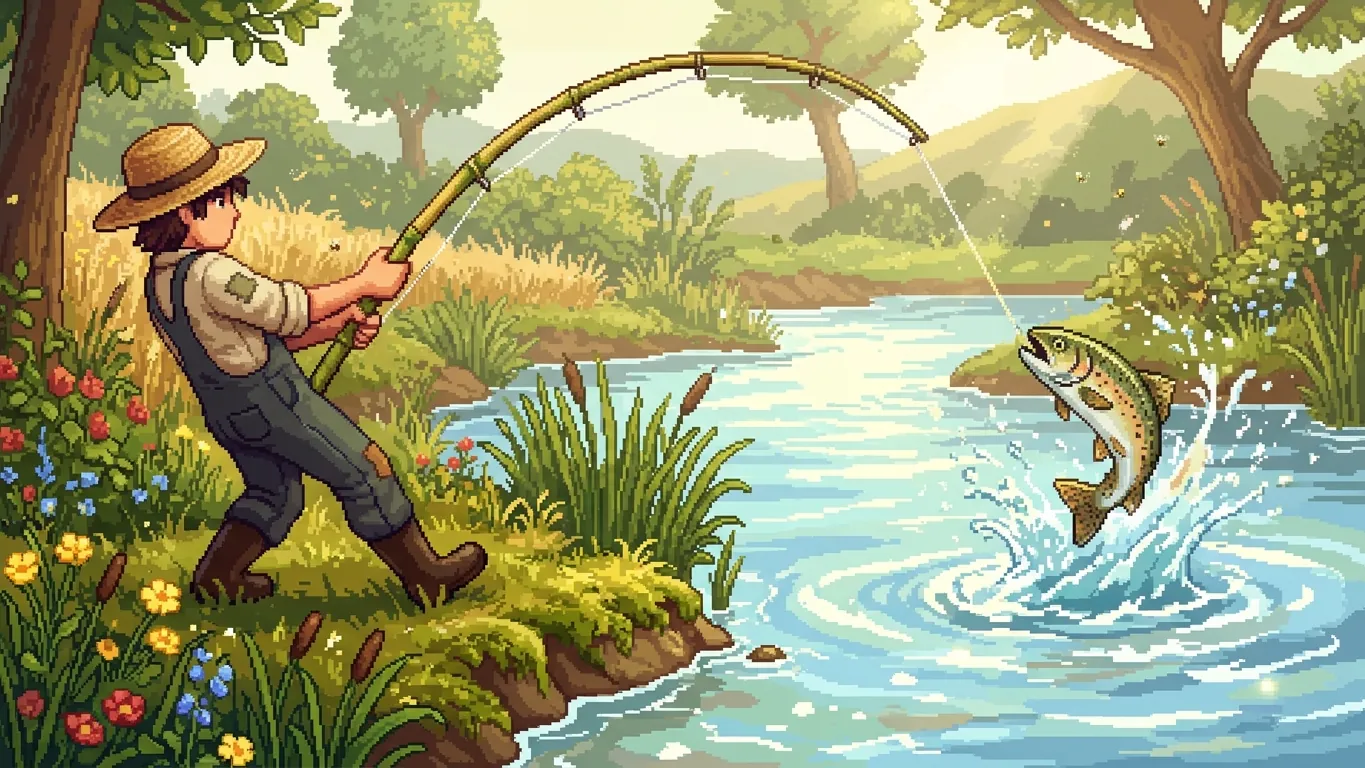
Casting: power, distance and patience
Every fishing trip starts with a cast. When you hold the use button with a rod selected, a power meter fills and empties. Releasing it at a higher point sends the bobber further out. Distance matters because deeper water, further from the shore, tends to give you a better chance at higher quality catches and at the fish that prefer open water.
Casting uses a small amount of energy, so it is worth bringing some food on longer trips. After the bobber lands, wait for the exclamation signal that a fish has bitten, then press the button again to start the minigame. If you wait too long, the fish may get away before the minigame begins.
Look out for bubbling patches on the water surface. These areas usually lead to bites more often while they last, so casting into them is a simple way to make a short session more productive.
The green bar and the catch meter
Once a fish bites, a vertical panel appears. Inside it, a small fish icon moves up and down, and you control a green bar. Holding the button pushes the bar upward; releasing it lets the bar fall. Your goal is to keep the fish inside the green area.
Next to the panel is a catch meter. While the fish stays inside your bar, the meter fills. When the fish slips out, it drains. Fill it completely and you land the fish; let it empty and the fish escapes. This means you do not need to be perfect. Small mistakes are fine as long as you recover quickly.
The size of the green bar is tied to your fishing skill level, so it grows as you practise. Early on, a small bar can feel unforgiving, but it becomes noticeably more comfortable after a few levels.
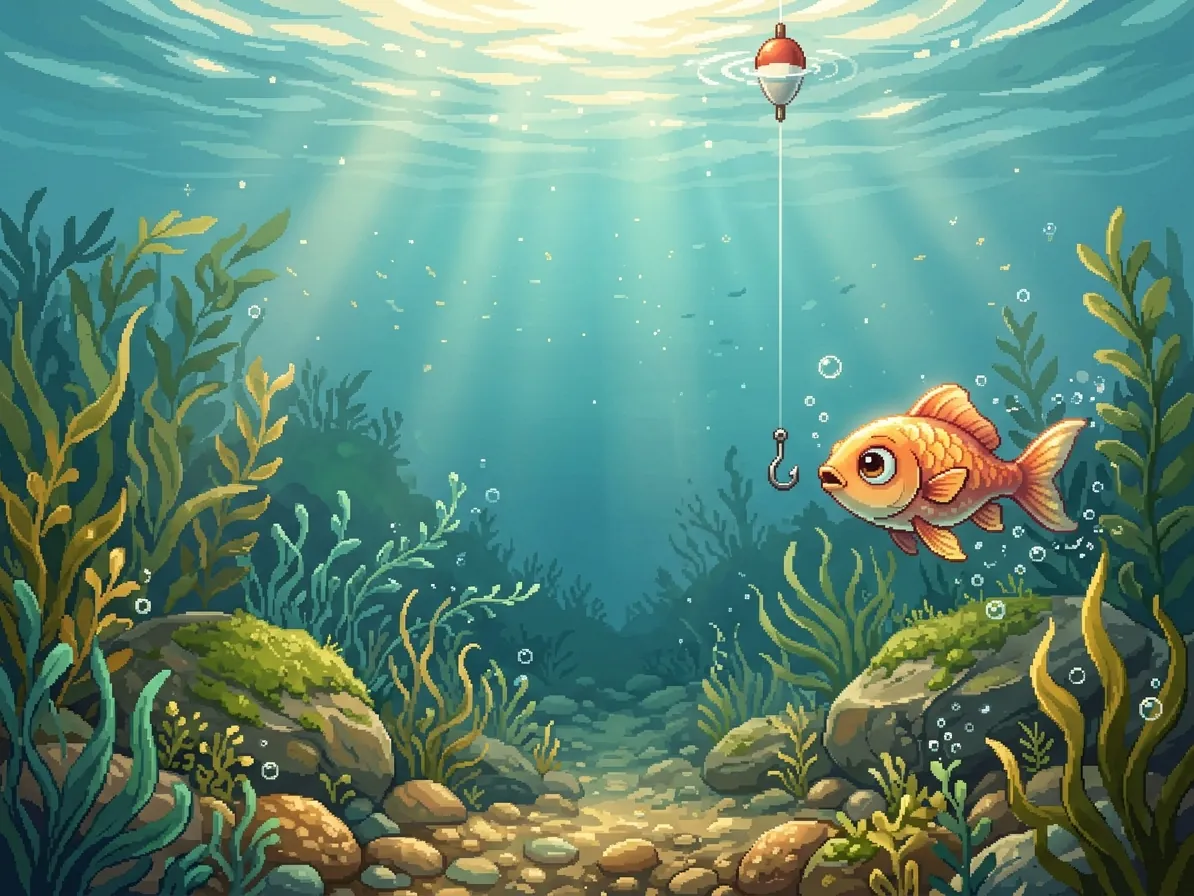
Reading how different fish move
Fish do not all behave the same way. Some drift slowly and are easy to follow. Others dart, sink suddenly or bounce between the top and bottom of the panel. Paying attention to these patterns is the single most useful skill to develop.
A good habit is to watch the first second or two of movement before reacting strongly. Rapid, light taps keep the bar hovering in place, which suits calm fish. For fish that make sudden jumps, it often helps to keep the bar slightly ahead of the direction they are heading. The bar has momentum, so pressing and releasing early is usually smoother than reacting late.
Treasure chests and perfect catches
Occasionally a small treasure chest appears inside the panel during the minigame. If you keep it within the green bar long enough, you collect it along with the fish. Treasure can contain useful materials and items, so it is a pleasant bonus. Chasing it does carry risk, though: while the bar is away from the fish, the catch meter drains. If a fish is difficult, it is perfectly reasonable to ignore the chest.
If the fish never leaves your green bar from start to finish, you achieve a perfect catch. This can improve the quality of the fish and gives extra experience. It is a nice goal for easy fish, but not something to worry about while you are still learning.
A gentle practice routine for new anglers
If the minigame feels stressful, try this simple routine over a few in-game days.
- 01
Start in easy waters
Fish in the town river or at the beach during the day, where many common fish move gently.
- 02
Tap instead of holding
Use short, rhythmic taps to keep the bar steady before trying long presses.
- 03
Ignore treasure at first
Focus on keeping the fish in the bar and let chests go until you feel comfortable.
- 04
Bring snacks
Pack a few simple foods so you can keep practising without running out of energy.
- 05
Fish a little every day
Short daily sessions raise your skill steadily, which widens the bar and makes everything easier.
Related articles
 Following the seasons from the riverbank
How seasons, weather and time of day decide which fish appear in Stardew Valley, and how to plan relaxed fishing trips across the farming year.
Read more
 Choosing the right gear for your fishing days
A clear overview of fishing rods, bait and tackle in Stardew Valley: what each upgrade does, when it unlocks and how to choose for your play style.
Read more
 Bringing the water closer to home
How crab pots and fish ponds bring fishing into your daily farm routine in Stardew Valley, with tips on placement, upkeep and what they produce.
Read more